
How To Pronounce The Unique Icelandic Letters Þ And Ð

Author
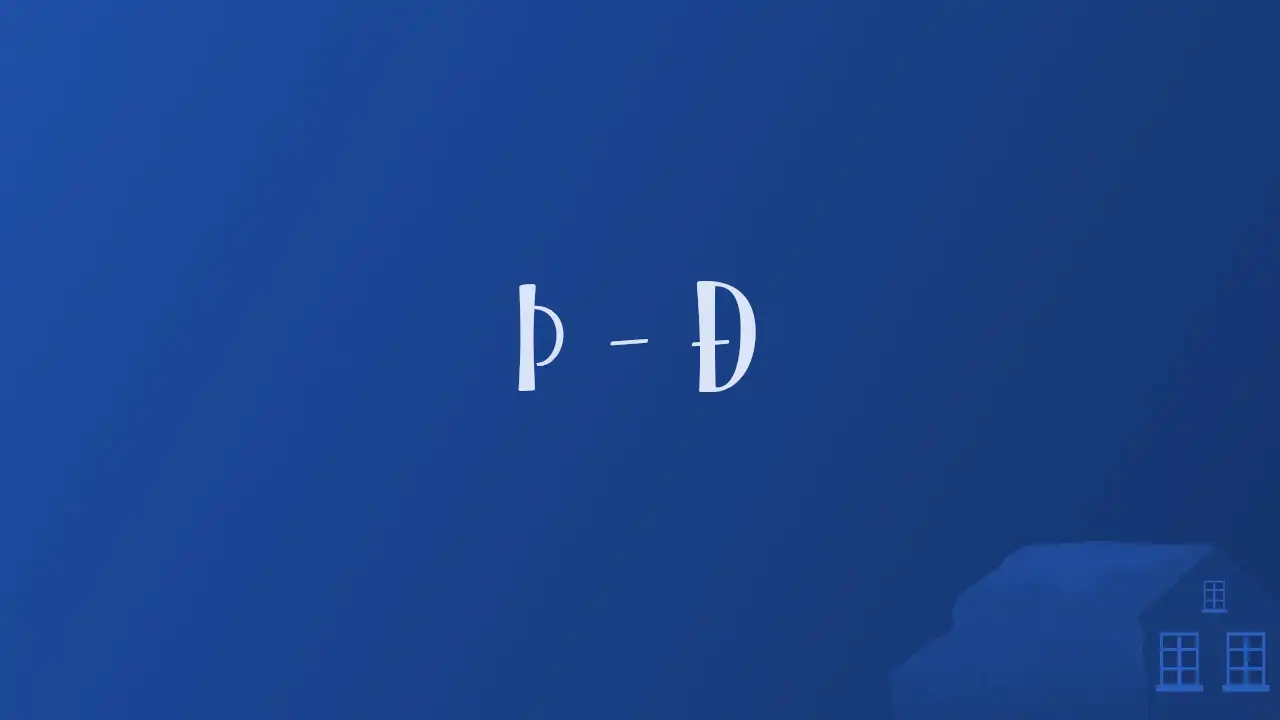
When you first look at the Icelandic alphabet, two letters usually jump out and make you scratch your head: Þ (þ) and Ð (ð). They might look like they belong in a fantasy novel, but they are a normal part of our everyday language.
And I have some good news for you: if you speak English, you already know how to make these sounds!
These letters represent the two “th” sounds we have in English, like in the words “think” and “that”. This guide will show you which is which and how to pronounce them perfectly. Let’s get started!
Table of Contents:
The ‘th’ sound in ‘think’: How to pronounce Þ (thorn)
The letter Þ, þ (called “þorn” or “thorn” in English) makes the voiceless “th” sound.
What does “voiceless” mean? It means you make the sound using only air, without vibrating your vocal cords. It’s the same sound you use at the beginning of English words like:
- think
- three
- thirsty
To make the sound, place the tip of your tongue lightly behind your top front teeth and push air out. It should be a soft, airy sound.
Here are a few Icelandic words that use the þ sound:

Þú
Þakka
Þak
The ‘th’ sound in ‘that’: How to pronounce Ð (eth)
The letter Ð, ð (called “eð” or “eth” in English) makes the voiced “th” sound.
”Voiced” is the opposite of voiceless. To make this sound, you use the exact same mouth position as you did for þ, but this time, you vibrate your vocal cords. You should feel a slight buzzing or vibration in your throat.
It’s the same sound you hear in English words like:
- that
- this
- brother
Let’s try some Icelandic words with the ð sound:
Eða
Rauður
Bað
Key differences and a simple trick
The only difference between þ and ð is voicing—whether or not your vocal cords vibrate.
Here’s a super simple trick to feel the difference:
- Place your fingers gently on your throat.
- Now, say the English word “think.” You should feel nothing but air. That’s the voiceless þ sound.
- Keeping your fingers there, say the English word “that.” You should feel a vibration or a buzz. That’s the voiced ð sound!
You can use this trick anytime you’re unsure which sound to make.
Here is a quick summary table:
| Letter | Name | Sound | English Example | Voiced? |
|---|---|---|---|---|
| Þ, þ | Thorn (Þorn) | Voiceless “th” | think | No |
| Ð, ð | Eth (Eð) | Voiced “th” | that | Yes |
Where you’ll find Þ and Ð in Icelandic words
Besides the sound, there’s another easy rule that helps you tell these letters apart. It’s all about where they appear in a word.
Þ (thorn) can appear at the beginning of a word.
Þorp
Ð (eth) will never appear at the beginning of a word. You will only find it in the middle or at the end of a word.
Veður
Hvað
This is a fantastic rule to remember. If you see a “th” sound at the start of an Icelandic word, it will always be written with a Þ. If it’s in the middle or at the end, it will be a Ð.
Unlike some other parts of Icelandic, the pronunciation of these two letters is consistent across all regions of Iceland. Everyone makes the same distinction between the airy þ and the buzzy ð.
You’ve got this!
See? Not so scary after all! You already had the sounds in your toolkit from English; you just needed to connect them to the new letters.
Remember the simple rules:
- Þ (þ) = Voiceless “th” as in “think”. Can start a word.
- Ð (ð) = Voiced “th” as in “that”. Never starts a word.
Keep practicing with the hand-on-the-throat trick, and soon you’ll be pronouncing these letters like a true Icelander.
